MediDent Istanbul Clinical Team · Medically reviewed by: Dr. Ahmet Çelik · 2026-09-11
"Turkey teeth" means aggressive full-mouth crowns or veneers placed abroad after heavy preparation of teeth that often did not need that much cutting. The country is not the problem. Speed-driven clinic models that skip a tooth-by-tooth plan are.
Key points
- Turkey teeth is a social-media nickname, not a diagnosis. It usually means a full arch of very white crowns after healthy enamel was reduced far more than a conservative plan would allow.
- You avoid problems by forcing a written, tooth-by-tooth plan before any deposit: which teeth get crowns, which get veneers or bonding, which stay untouched, and which ceramic brand will be used.
- Typical full-arch crown trips abroad are sold as 5–7 days. Careful veneer or selective crown work often needs two visits or a longer first stay so temporary teeth can be tested in speech and bite.
- Price gaps vs the UK or Germany mostly come from clinic rent, lab labour and staff costs — not from a different ceramic brand list. Ask for the brand name in writing anyway.
- Red flags: crowns on teeth with no fracture, large filling or root-canal history; no dentist name before booking; prices that only work if every tooth is crowned; deposit before you have a plan you can show your home dentist.
- After you fly home you still need a remote check-in plan: photos at set intervals, who to message if a temporary loosens, and what the written warranty covers for chipping or fit issues.
What does “Turkey teeth” actually mean?
If you searched Turkey teeth, you already saw the photos: a full set of bright, almost identical teeth after a short trip to Istanbul or Antalya. The phrase is informal. It is not a medical term and it does not mean every dental clinic in Turkey works that way.
In practice, Turkey teeth usually describes a package that replaces a large number of teeth with crowns in one go. Crowns wrap the whole tooth. To fit them, the dentist must reduce enamel and often dentine on all sides. When that is done on teeth that were only stained, slightly crowded or worn at the edges, you lose healthy structure you cannot get back.
The nickname stuck because UK and Irish social media shared cases where patients expected a smile makeover and left with irreversible crown work. Some of those patients were happy with the look at first. Others later reported sensitivity, gum issues, bite problems or the need for remakes. The common thread in the bad stories is not the passport stamp. It is a clinic model that sells a fixed full-mouth outcome before a real diagnosis.
If your quote lists 20–28 crowns as the default “Hollywood” package, pause. Many smiles need far fewer units. The gap between a social-media template and a tooth chart is where most regret starts.
Why do people still fly to Istanbul for teeth?
People fly because waiting lists at home are long, private quotes for 16–24 units feel unreachable, and Turkey has a dense network of labs and clinics used to international patients. That demand is real. So is the variation in quality.
A careful clinic can deliver zirconia or lithium-disilicate work with CAD/CAM workflows similar to Western Europe. A volume clinic can also schedule you for preparation on day one and finals on day three with little time to live with temporary teeth. Both exist in the same city. Your job is to tell them apart before you book flights.
If your goal is whitening, bonding or a few veneers, a full-arch Turkey teeth package is the wrong product. If you have broken teeth, large old crowns or missing teeth, some crown or implant work may be justified — still tooth by tooth, not as a social-media template.
Language support in English or German, hotel transfers and a coordinator who answers WhatsApp in the evening also lower friction. Convenience is useful. It is not evidence that the clinical plan is conservative.
Is the risk Turkey — or the clinic model?
Turkey trains dentists through a multi-year university programme and licenses clinics under the Ministry of Health. Health-tourism authorisation exists for facilities that meet extra paperwork requirements. None of that automatically protects you from overtreatment.
The risky model looks like this: a coordinator quotes a full smile price before anyone has seen your X-rays; the plan defaults to crowns on almost every visible tooth; the visit is compressed so remakes are hard; aftercare is a generic email address. The safer model looks different: named dentist, imaging first, options ranked from least to most invasive, written brands, and time for temporary teeth.
So when someone asks “are Turkey teeth safe?”, the honest answer is: some trips are clinically sound, some are not. Country-level fear is the wrong filter. Clinic-model questions are the right ones.
Watch for clinics that market “same-day full mouth” as a personality trait. Speed can be organised. Irreversible enamel removal on a compressed calendar is still irreversible.
Crowns, veneers or bonding — how much tooth gets cut?
This is the decision that decides whether Turkey teeth becomes your story. Bonding adds composite to the tooth surface. Little to no enamel is removed. Veneers are thin ceramic shells on the front; preparation is usually limited to a fraction of a millimetre when the case allows. Crowns cover the whole tooth; preparation removes more structure on every side and often needs more gum and bite management.
Ask for numbers in the plan, not slogans. How many teeth stay untouched? How many get bonding only? How many veneers? How many crowns — and why each crown (fracture, root canal, large old filling, existing crown remake)? If the answer is “we crown everything for a uniform look,” that is a cosmetic preference dressed as clinical necessity.
Material names matter too. Monolithic zirconia and lithium disilicate (for example IPS e.max-type ceramics) behave differently for strength and translucency. A clinic that will not write the brand on the plan is asking you to trust a price tag instead of a specification.
A useful rule of thumb in conversation: if a tooth has never had a large filling, crack, root canal or existing crown, ask why a new crown is on the list at all. Aesthetic wishes can often be met with less.
How many days do you actually need?
Marketing often says 5–7 days for a full smile. That can be enough for a straightforward crown remake when labs sit next to the clinic and your bite is simple. It is tight if you need gum healing time, if temporaries must be adjusted after real meals and speech, or if you want a second opinion on shade before finals.
Selective veneers or mixed plans may need two visits weeks apart. Implant cases are longer by definition — healing is measured in months, not Instagram reels. If a coordinator promises a full arch of new teeth with no temporary phase and no contingency day, assume the schedule serves the clinic calendar more than your mouth.
Build a buffer day before you fly home. Swelling, a high spot on a temporary, or a shade change is easier to fix in Istanbul than from Manchester or Berlin with a phone camera.
Also ask how many laboratory try-ins are included. One try-in with time to speak and smile in natural light is different from cementing finals the morning after preparation.
Why are prices lower — without the sales pitch?
Clinic rent, dental-lab labour and staffing costs in Istanbul are usually lower than in London, Dublin or Munich. That can reduce the fee for the same ceramic system. It does not mean a €90 crown and a carefully planned zirconia unit are the same product.
A quote that only works if every tooth is crowned is not a bargain analysis — it is a business model. Compare like with like: same number of units, same material class, same imaging, same temporary phase, same written aftercare. If those lines are missing, the headline price is incomplete.
We will not list a price menu here. Fees change with bone, bite, gum health and how many teeth truly need work. A written plan after imaging is the only honest quote.
Currency and local purchasing power shift fees year to year. That is another reason a screenshot from a stranger’s 2023 trip is a weak budget tool for your mouth in 2026.
Questions that expose a bad plan before you book
Send these in writing and keep the replies. Who is the treating dentist — full name, not only the brand name of the clinic? Which teeth get crowns versus veneers versus bonding, and why? Which ceramic or implant brand will be used? Can you share the plan with your home dentist before paying a deposit? What is the temporary phase, and what happens if a unit fails in the first weeks after you return?
Refuse pressure scripts: “seats are filling this week,” “the offer expires if you ask for brands,” “everyone gets the same Hollywood set.” Ethical cosmetic work starts from your photos and radiographs, not from a catalogue smile.
If the clinic cannot send a tooth chart and a material line before travel, you do not have a plan yet. You have a sales funnel.
Record video calls if your local rules allow it. Vague answers that sound warm but never name a dentist or a brand are still vague answers.
What a careful plan looks like day by day
Before travel: photos, panoramic or CBCT when indicated, medical history, and a draft plan you can print. Deposit only after you understand which teeth change and which stay.
Day 1–2 on site: exam, confirmation imaging, shade discussion, and agreement on the least invasive option that still meets your goal. Preparation should match that agreement — not a surprise upgrade to full crowns in the chair.
Middle days: temporaries you can eat and speak with; adjustments for high spots and lip support. Final days: try-in of ceramics, bite check, cementation or bonding protocol, and written home-care instructions plus a remote follow-up channel.
That sequence is slower than a three-day package. It is also how you avoid becoming another Turkey teeth cautionary post.
Leave with copies: final tooth chart, material lot or brand notes if provided, cementation date, and the aftercare contact saved under a real name — not only a clinic logo.
What if something feels wrong after you fly home?
Before you leave the clinic, know who answers evenings and weekends, what photos to send, and whether a temporary or final can be remade under the written terms. Sensitivity for a short period can be expected after preparation; sharp pain, a rocking unit, or a bite that hits one tooth hard should not wait for “your next holiday.”
Ask whether the clinic coordinates with a dentist near you or only offers remote advice. Remote checks help for shade and obvious fit issues. They cannot replace hands-on care for infection or a failed temporary if you need same-day help.
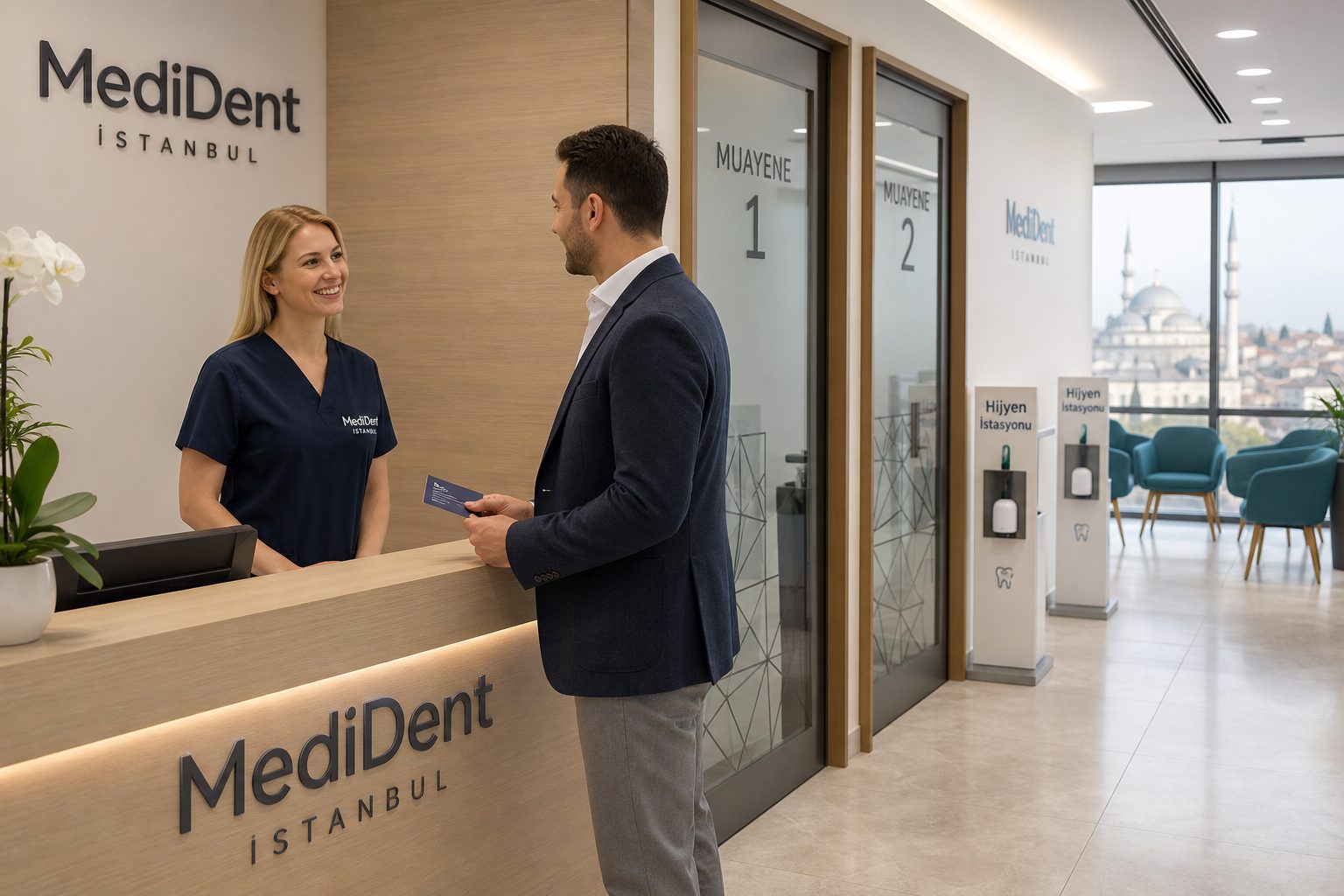
At MediDent Istanbul, international patients get a post-treatment WhatsApp channel and scheduled remote check-ins. Warranty wording should still be in writing before you pay — do not rely on chat promises alone. Ask the clinic to spell out duration and what counts as a covered failure before you pay.
Keep your temporary and final appointments documented. If you need a local emergency dentist, a clear written history shortens the visit and reduces guesswork about what was cemented when.
Does MediDent default to full-mouth crowns?
We should not — and if a plan here ever jumps to crowning healthy teeth without showing you veneers or bonding first, challenge it. Our planning starts with imaging and digital smile design so you can see options before enamel is removed. If whitening, bonding or selective veneers reach the goal, those come first.
You still need to verify the named dentist, the material brands and the written tooth chart for your case. Trust pages are not a substitute for your documents. Bring a sceptical checklist even when you like the clinic.
If you are comparing clinics, judge us by the written plan we send you — not by this page alone. Pages age; your chart should not.
Frequently asked questions
What exactly does “Turkey teeth” mean?
It usually means a very white, uniform full set of crowns placed abroad after heavy tooth reduction. The phrase is colloquial. It does not describe every veneer, bonding or justified crown case done in Turkey.
Is dental treatment in Turkey safe?
It can be — at a clinic that names the dentist, shows imaging, writes materials, and ranks options from least to most invasive. Safety is a clinic-model question, not a country slogan.
How can I tell a good clinic from a bad one?
Before booking, get five answers in writing: treating dentist name, exact ceramic or implant brand, tooth-by-tooth crowns vs veneers vs bonding, whether you can share the plan with a home dentist, and the aftercare channel once you return.
Why are fees often lower than in the UK or Germany?
Lower clinic rent, lab labour and staff costs explain much of the gap. Reputable clinics still use CAD/CAM workflows and ceramic systems also sold in Western Europe. A quote without brands and unit counts is not comparable.
Crowns vs veneers — how do I know which I need?
Crowns cover the whole tooth and need more preparation. Veneers are thin front shells with less reduction when the case allows. Structurally sound teeth usually deserve bonding or veneers first — not automatic crowns for a matching shade.
How long should I stay for a smile makeover?
Full-arch crown packages are often sold as 5–7 days. Build at least one buffer day. Mixed veneer plans or anything that needs healing may need two visits. Implants follow bone healing timelines measured in months.
What should I do if something goes wrong after I fly home?
Use the clinic’s remote channel with clear photos, ask for a same-week plan, and see a local dentist if pain, swelling or a loose unit needs hands-on care. Confirm warranty and remake rules in writing before treatment — not after.
Does MediDent Istanbul place unnecessary crowns?
Our stated approach is imaging first and conservative options before full crowns. Still demand a named dentist, a tooth chart and material brands for your own case. Soft marketing claims are not your clinical record.